Rewiring Manufacturing Sales for Today’s Buyers
Manufacturing sales organizations win by equipping their sales force to be the competitive advantage.
Acquisitions have pushed most portfolios well past what a single rep used to represent. Deals now involve four or more decision makers as a matter of course. More than 60% of buyers say they actively avoid sellers until they're ready to buy.
In this webinar, Tom Stanfill, Tab Norris, and Jesse Rome unpacked what it takes to compete inside that shift.
Key Takeaways
- Three compounding challenges are reshaping manufacturing sales: an expanding portfolio, buying cycles with four or more decision makers, and declining access, with 60%+ of buyers now actively avoiding sellers.
- Most reps enter the customer's decision process at the point of least influence: The highest-leverage sellers earn a seat at the table upstream, before the spec or budget is locked.
- Becoming a Trusted Partner isn't just a philosophy. It's measurable: Trusted Partners outperform their peers by 105%.
The Big 3: Challenges Reshaping Manufacturing Sales
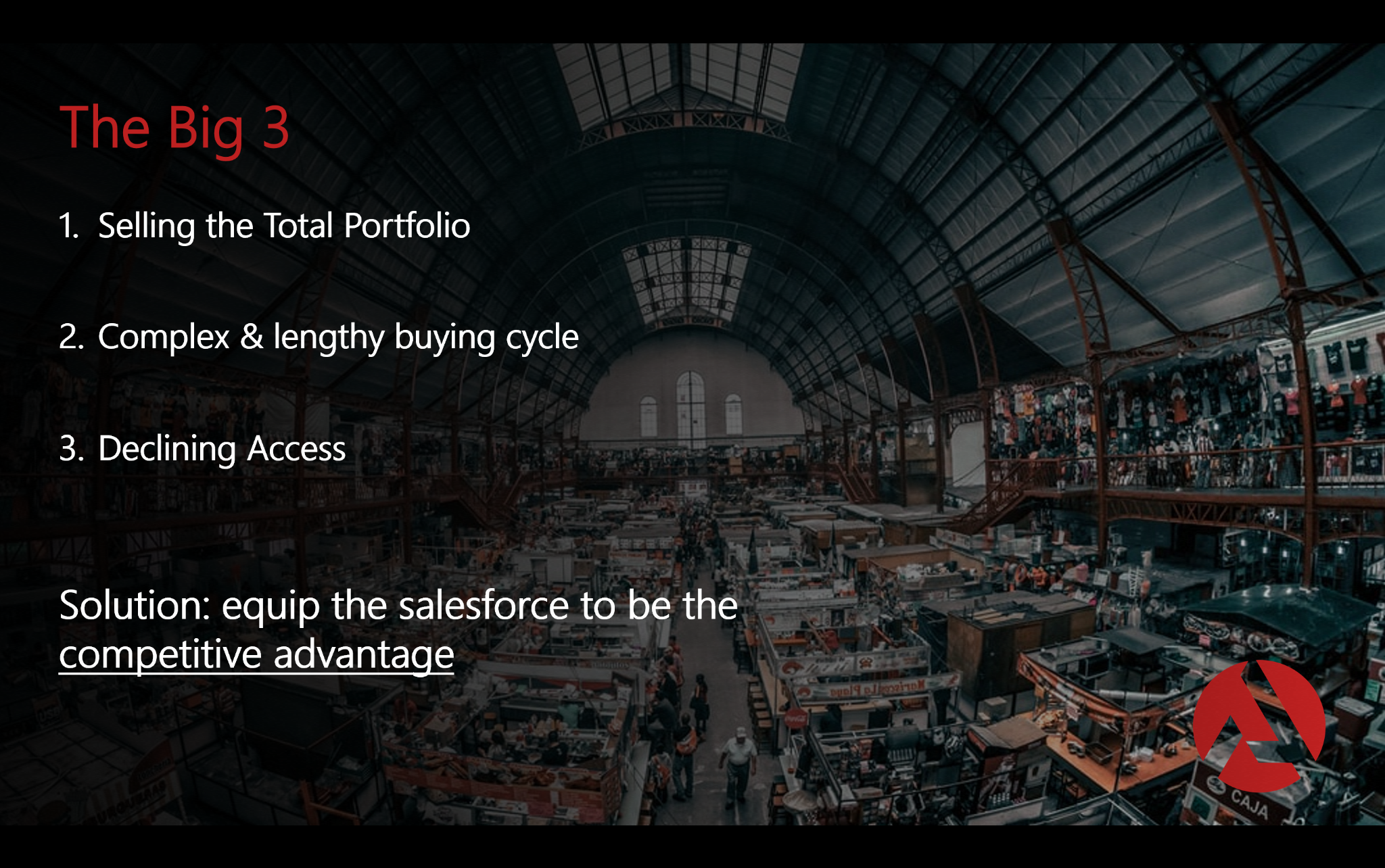
Three pressures are compounding at once, and each one makes the others harder to solve.
- Selling the total portfolio: Reps default to the products they know best. As manufacturers consolidate business units through acquisition, a rep who used to represent one product line now has to represent five, without the discovery skills to do it.
- A complex, lengthy buying cycle: Manufacturing deals now regularly involve four or more decision makers, accelerated by virtual meetings where adding another stakeholder costs nothing but a calendar invite.
- Declining access: More than 60% of buyers actively avoid sellers. They can research the category, compare options, and shortlist vendors before ever picking up the phone.
There are only two ways to compete here. One is to have the most innovative product in every category. Most manufacturing organizations aren't built that way, and most categories don't work that way either.
The other path: equip the sales force to be the competitive advantage. That means helping reps understand what the decision maker is trying to accomplish and guiding them to a decision, not just maintaining the relationship.
Why Reps Get Stuck at the Buyer Level
Most account managers think their job is to maintain the relationship. That's not the job. The job is to shape the decision, and most reps never get positioned to do it.
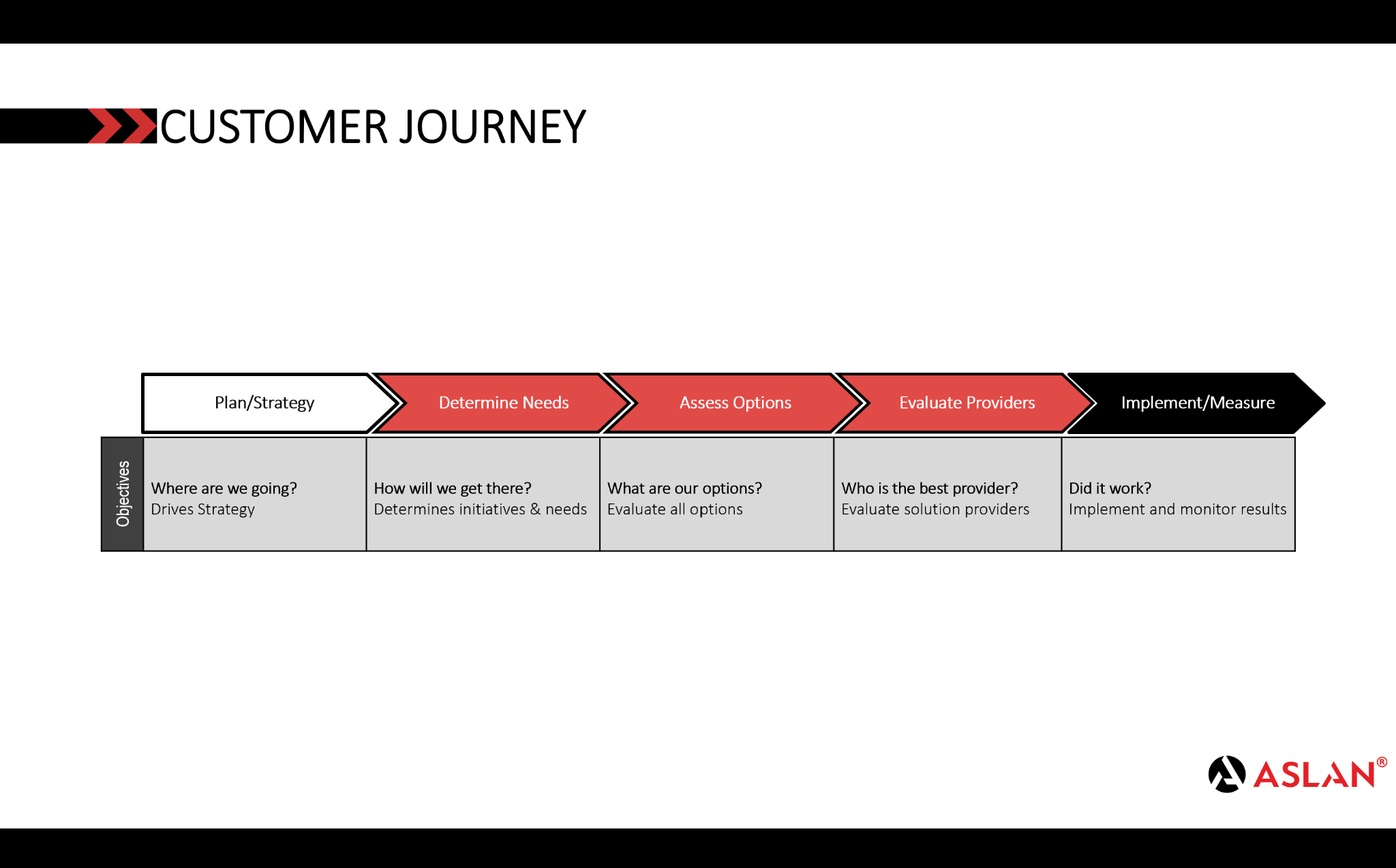
Map the customer's own decision journey instead of the sales process built around your CRM. Every organization moves through the same stages when making a major investment:
- Plan/Strategy: Where are we going? Driven by executives.
- Determine Needs: How will we get there? Driven by management.
- Assess Options: What are our options? Driven by buyers.
- Evaluate Providers: Who's the best provider? Driven by buyers.
- Implement/Measure: Did it work? Driven by executives.
Most manufacturing reps enter this process at Evaluate Providers, the stage with the least influence over the outcome. By the time they're invited in, the strategy is set and the budget is approved. They're responding to a decision instead of shaping it.
The shift: move upstream into Plan/Strategy and Determine Needs, where a rep earns a seat at the table as a Trusted Partner instead of a vendor responding to an RFP.
The payoff here is real: Trusted Partners outperform their peers by 105%.
Three Capabilities to Build
Once the role is reframed, three capabilities determine whether a rep can actually operate at that higher level.
1. Convert the Unreceptive
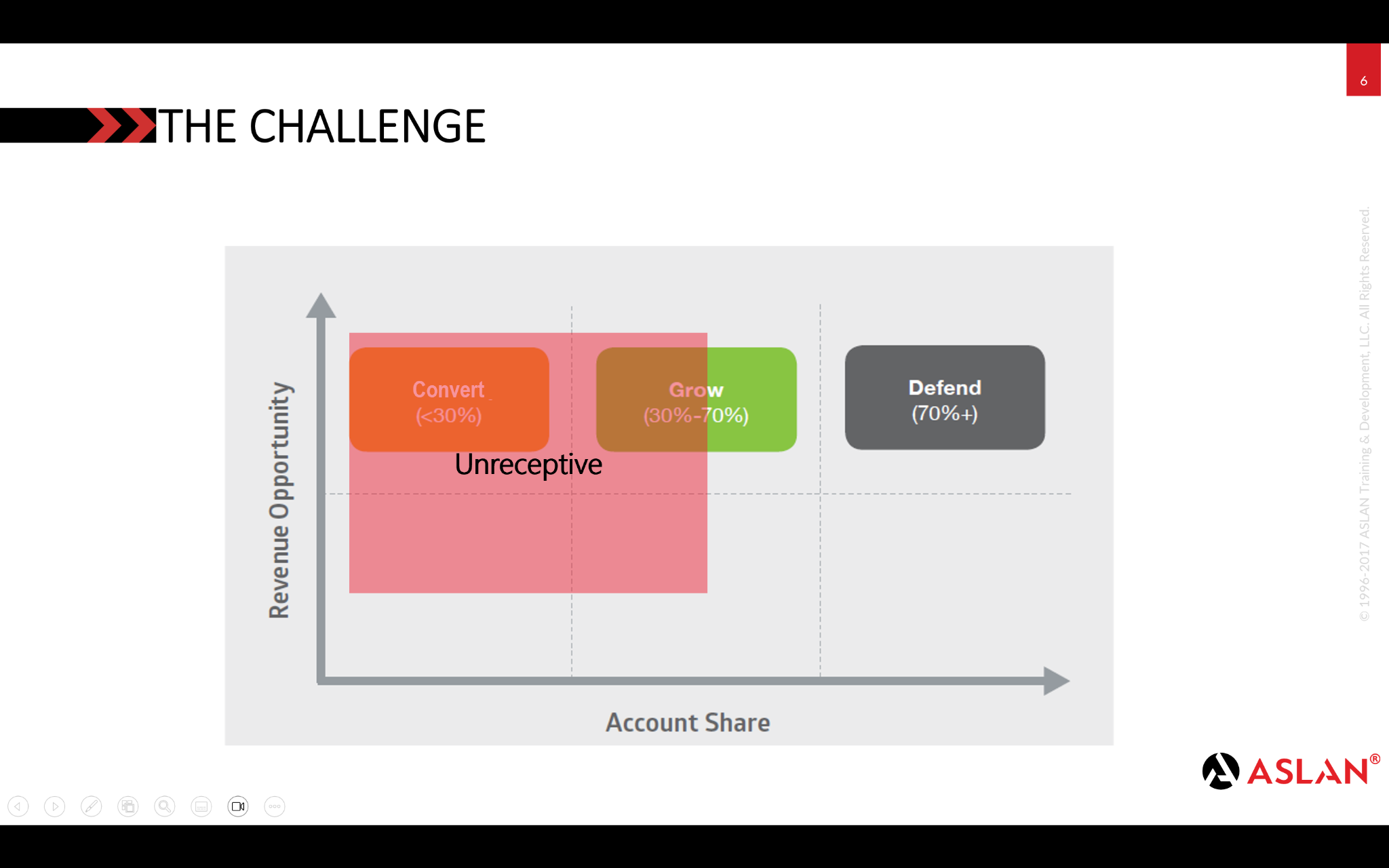
Every account manager's book of business splits into three categories: accounts to defend, accounts to grow, and accounts to convert. Convert is where most manufacturing teams struggle, because the challenge isn't logical. It's emotional. Push a customer who's already closed on a subject, and they close further.
The fix is creating receptivity before delivering any message. In other words, Drop the Rope®. Instead of pulling a customer toward a position, sellers release the pressure and communicate that the decision genuinely belongs to the customer.
Assess your organization:
- Is every message and sales resource designed to make the customer the hero of the story?
- Are you teaching sellers to eliminate pressure?
- Are they equipped to lead long-standing customers into discussing formerly closed subjects?
2. Move Upstream
Reaching decision makers earlier means knowing what's on their whiteboard: their priorities, their pressures, their open problems. A rep who shows up asking about products gets a polite meeting and nothing more. A rep who shows up with a disruptive truth, something the executive didn't already know, gets engaged.
Sponsorship matters here too. A sponsor is an internal advocate connected to the decision maker, aligned with the seller and willing to make the introduction. That introduction lands best when it's rooted in the executive's priorities, not the rep's agenda.
Assess your organization:
- Do your sellers understand what's on the decision-maker's whiteboard?
- Can they quickly build credibility by communicating a disruptive truth?
- Can they contrast your solution against every other option the executive is weighing?
3. Shift From Product to Business Discovery
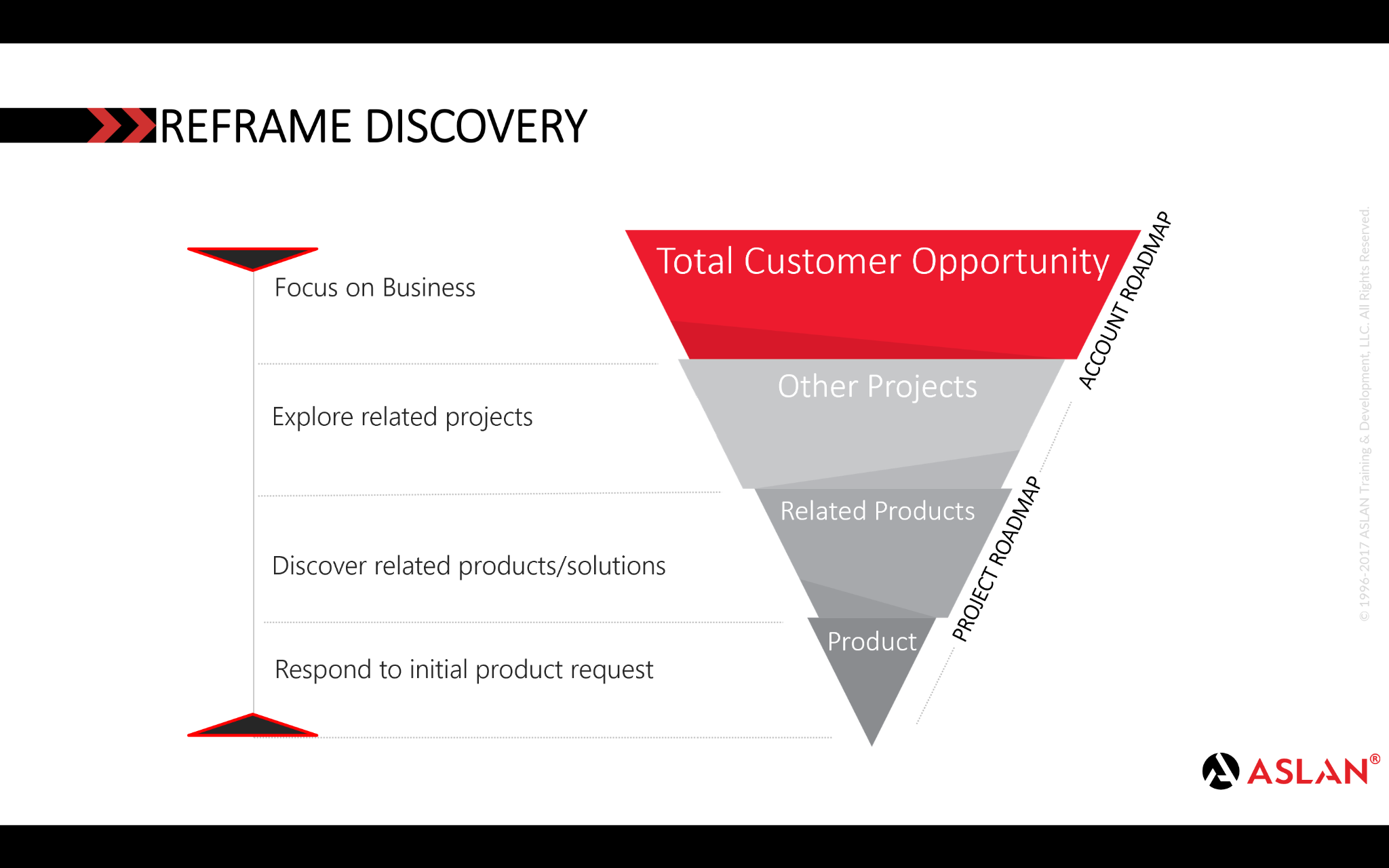
The final capability is expanding discovery past the product a customer originally called about. Discovery moves through four levels: the initial product request, related products, other projects the customer is working on, and the total customer opportunity across the account.
Reps don't need to jump straight to the top level. Two or three extra questions about other initiatives underway, asked of accounts a rep thinks they already know cold, is often enough to surface opportunity that was never on the radar.
Assess your organization:
- Is there a framework in place to support all four levels of discovery?
- Can your account managers align their questions to the decision-maker's specific role?
The Coaching Cadence That Makes Capabilities Stick
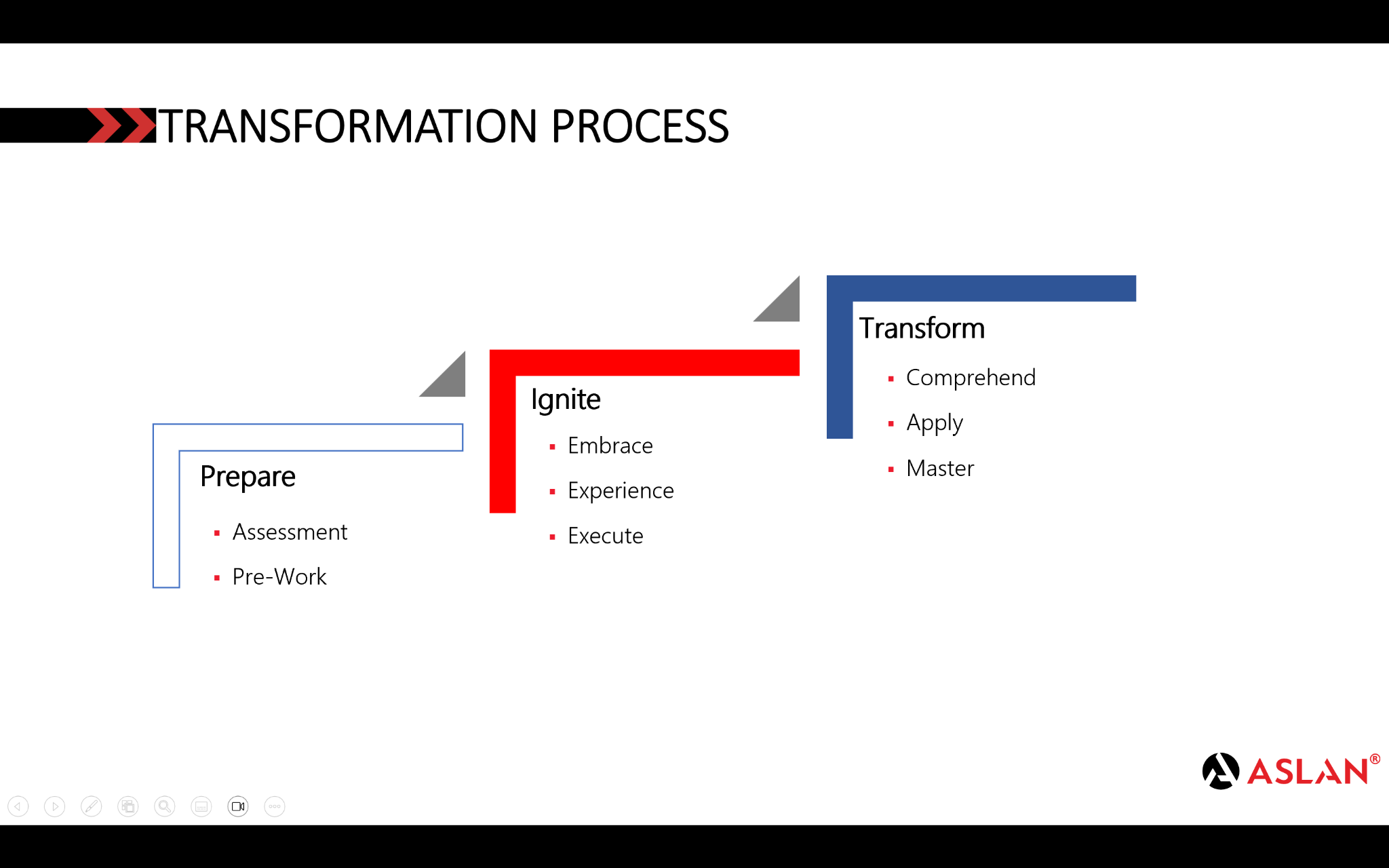
Capabilities fade without practice, and practice only happens with an ongoing coaching cadence, not a one-time training event. Coached teams consistently outperform otherwise similar teams inside the same organization by 44%, without even factoring in engagement.
To make that stick:
- Certify leaders first, before rolling training out to the broader sales force. Without their buy-in, reinforcement never happens.
- Build coaching into the calendar, not as an occasional check-in.
- Prioritize practice over knowledge transfer. Reps can learn a concept in an afternoon. Skills only change with repetition.
- Close the visibility gap. Managers can't coach what they can't see. Tools like ASLAN+ help by surfacing what's actually happening with reps between sessions.
Accountability still starts with leadership. If leaders aren't driving the cadence, the change doesn't outlast the workshop.
Build a Sales Force That's the Competitive Advantage
Manufacturing buyers have more information, more stakeholders, and more reasons to avoid a sales conversation than ever before. The organizations that win equip their sellers to move upstream, convert the unreceptive, and lead business-level discovery instead of waiting for the next product request.
Ready to assess where your team stands on these capabilities? Schedule a consultation with ASLAN.


Unlock Your Team's Full Sales Potential
Questions? Watch our CEO, Tom Stanfill, address our frequently asked questions below.