How to Earn Buyer Engagement in 2026: A Research Briefing for Sales Leaders
Most sales leaders already sense that something has shifted in how buyers engage.
In a recent webinar, ASLAN CEO Tom Stanfill and VP of Enterprise John Cerqueira unpacked findings from a double-blind study of 499 B2B buyers and 441 B2B sellers, examining how AI has changed buying behavior and what sellers need to do about it.
The data points to three findings with direct implications for how you build, coach, and develop your team.
Watch the recording here:
Key Takeaways
- Resistance is rising and AI is the primary driver: 82% of sellers report increased buyer resistance; 42% of buyers now depend less on sellers for information they used to provide.
- Buyers trust partners, not reps: 57% of buyers enter conversations already leaning toward a solution, yet 88% want sellers to advise on all their options (not just the one they're selling).
- Seller confidence doesn't match execution: 97% of sellers expect to hit quota; 95% say they need a better approach to do it.
Finding #1: Resistance Is on the Rise
82% of sellers report that buyer resistance has increased. Most organizations look at that number and reach for more outreach, sharper messaging, better pitches.
The buyers in this study told us what's actually driving it, and it points to something different.
Driver #1: AI Has Changed What Buyers Need From Sellers
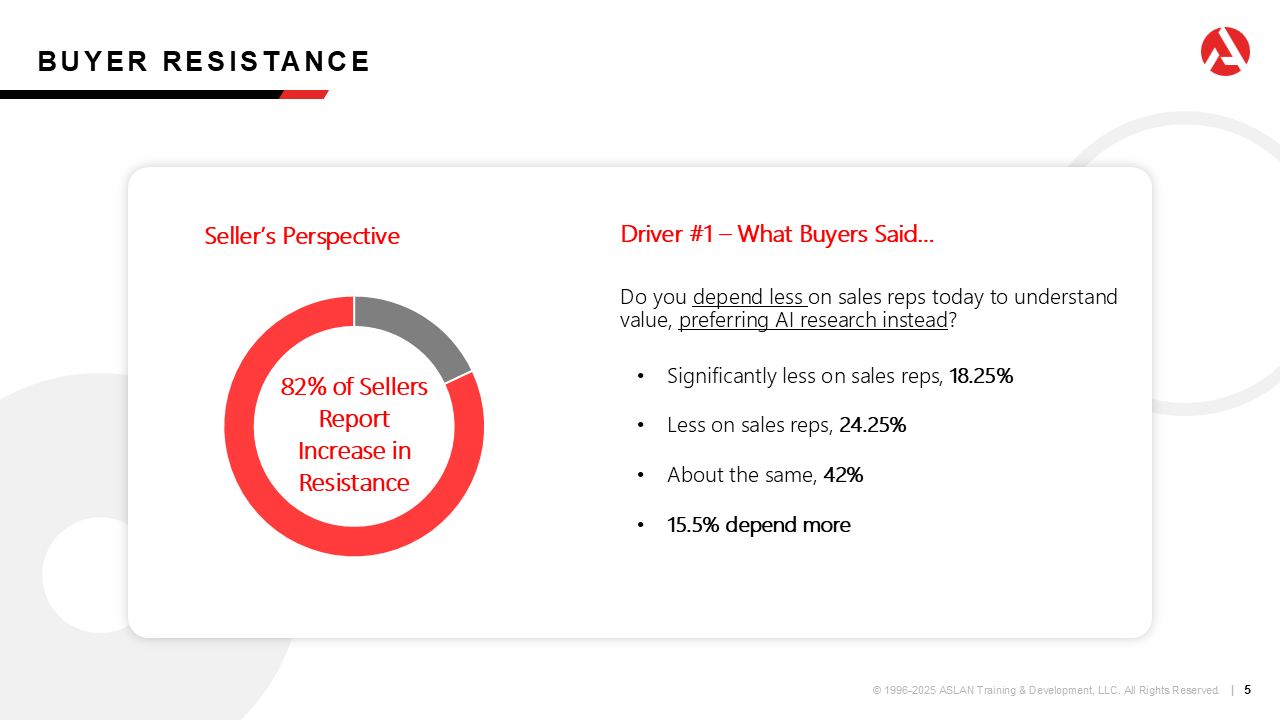
What buyers need from sellers has shifted. They no longer need sellers to explain the category, compare options, or surface basic information. AI does that faster and for free.
- 42% of buyers now depend less on sellers to understand value, preferring AI research instead (18% significantly less, 24.% less)
- 15% depend more on sellers than before
That last 15% is worth noting. Buyers overwhelmed by noise who want a real guide are a genuine opportunity. But the majority direction is clear.
The seller who shows up to inform buyers is arriving too late. They've already done that work. What they can't get from AI is a seller who understands their specific business, their priorities, and what they should actually be thinking about.
If you're still training sellers to lead with product knowledge and value propositions, you're equipping them for a version of the job buyers have already moved past.
It also means rethinking how your sales process is built. Most organizations design it around the CRM: what stage is the rep in, what's the next step, what does the pipeline look like. Almost none design it around where the buyer actually is.
Driver #2: Seller Behavior Is Making It Worse
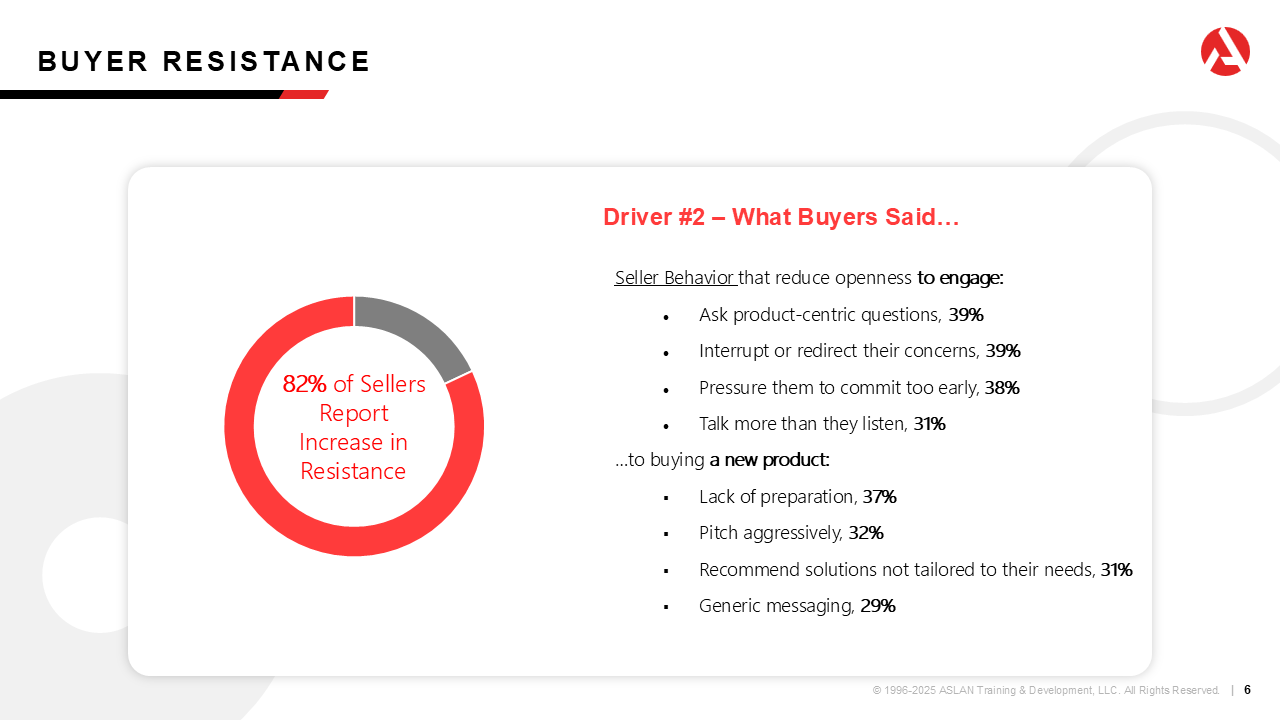
Even before AI, buyers had a list of seller behaviors that made them less willing to engage. Now that they have an alternative, those behaviors are costing deals.
Behaviors that immediately reduce a buyer's openness to engage:
- Asking product-centric questions: 39%
- Interrupting or redirecting their concerns: 39%
- Pressuring them to commit too early: 38%
- Talking more than listening: 31%
Behaviors that inhibit buyers from evaluating a new product:
- Lack of preparation: 37%
- Aggressive pitching: 32%
- Recommending solutions not tailored to their needs: 31%
- Generic messaging: 29%
None of this is new feedback. Buyers have said these things for years. What's changed is that they now have a credible alternative: one that doesn't pitch, doesn't redirect, and doesn't send the same email it sent the last fifteen people.
A buyer's willingness to listen is decided before you pitch a single thing. If sellers are triggering these behaviors in the first few minutes, the conversation is already over.
Three places to start:
- Develop the mindset and capabilities to reduce resistance before selling anything
- Align the sales process with the buyer journey, not the CRM
- Make customer expertise an operating standard: something you hire for, test for, and coach to
Finding #2: Buyers Trust Partners, Not Reps
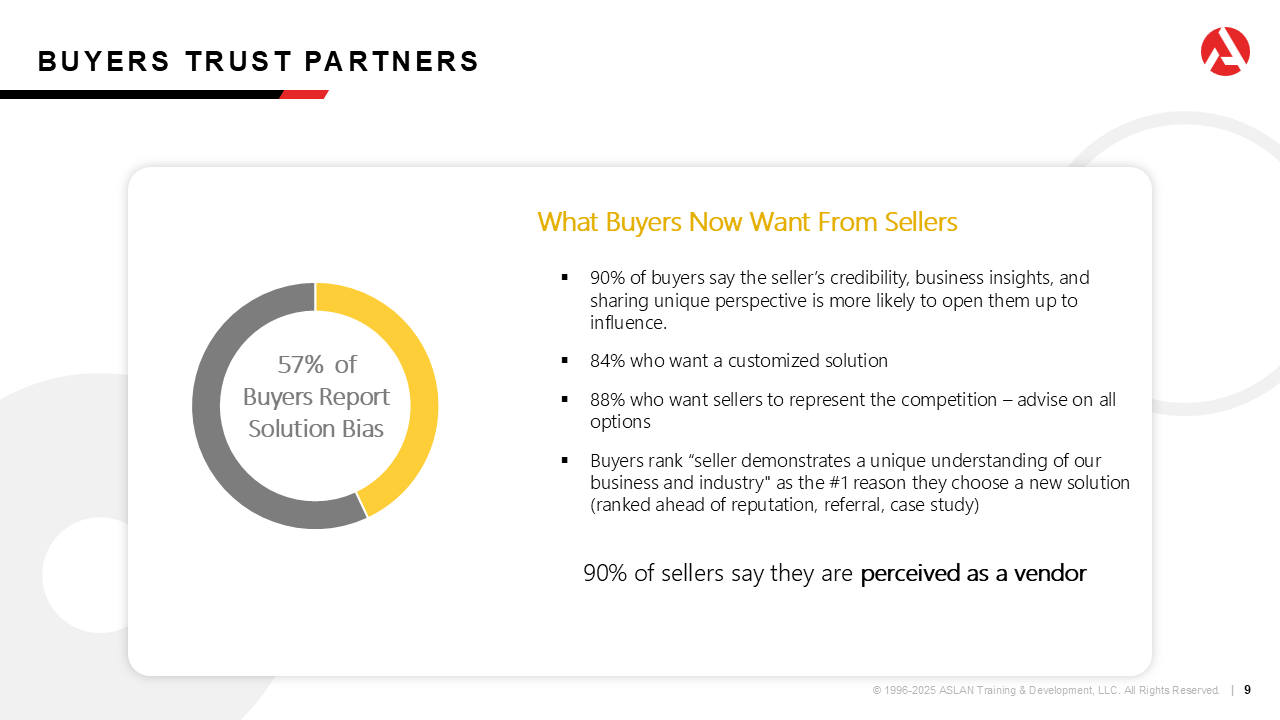
57% of buyers enter sales conversations already leaning toward a solution. They've done their research, they have a vendor in mind, they have a sense of what they want to spend. And 90% of sellers, even after months of working an account, are still perceived as vendors.
Buyers are arriving with higher standards than sellers are meeting. The research is specific about what those standards look like.
#1: What Buyers Are Actually Willing to Engage With
When asked what seller behaviors increase their openness to influence, buyers in the study were consistent. They want sellers who:
- Understand their business
- Demonstrate credibility
- Provide unique perspectives
- Adapt to their needs
- Share relevant insights
- Validate their point of view
90% say a seller's credibility, business insights, and willingness to share a unique perspective makes them more likely to open up. 84% require a customized solution.
When asked why they ultimately chose a new solution, buyers ranked "seller demonstrates a unique understanding of our business and industry" as the #1 factor. Ahead of company reputation. Ahead of referrals. Ahead of case studies.
What they're evaluating in a sales conversation is whether this seller has anything to offer that they couldn't find on their own. The sellers who win demonstrate, quickly and credibly, that they understand the buyer's world well enough to add something real to it.
That changes what preparing for a call actually means. Real preparation is genuine investment in understanding who you're talking to, what's going on in their business, and what they actually care about. Sellers who show up having done that work earn credibility in the first few minutes. Sellers who wing it lose it just as fast.
#2: 88% of Buyers Want Sellers to Represent All Their Options
When buyers were asked if they want sellers to provide insights on competitive offerings, 88% said yes.
Most competitive enablement trains in the opposite direction: battlecards, objection handlers, trap-setting questions designed to neutralize competitors. That's arming reps to win a bake-off. Buyers want a seller who helps them think through the decision, including the alternatives they're already weighing.
The switching data shows what's at stake:
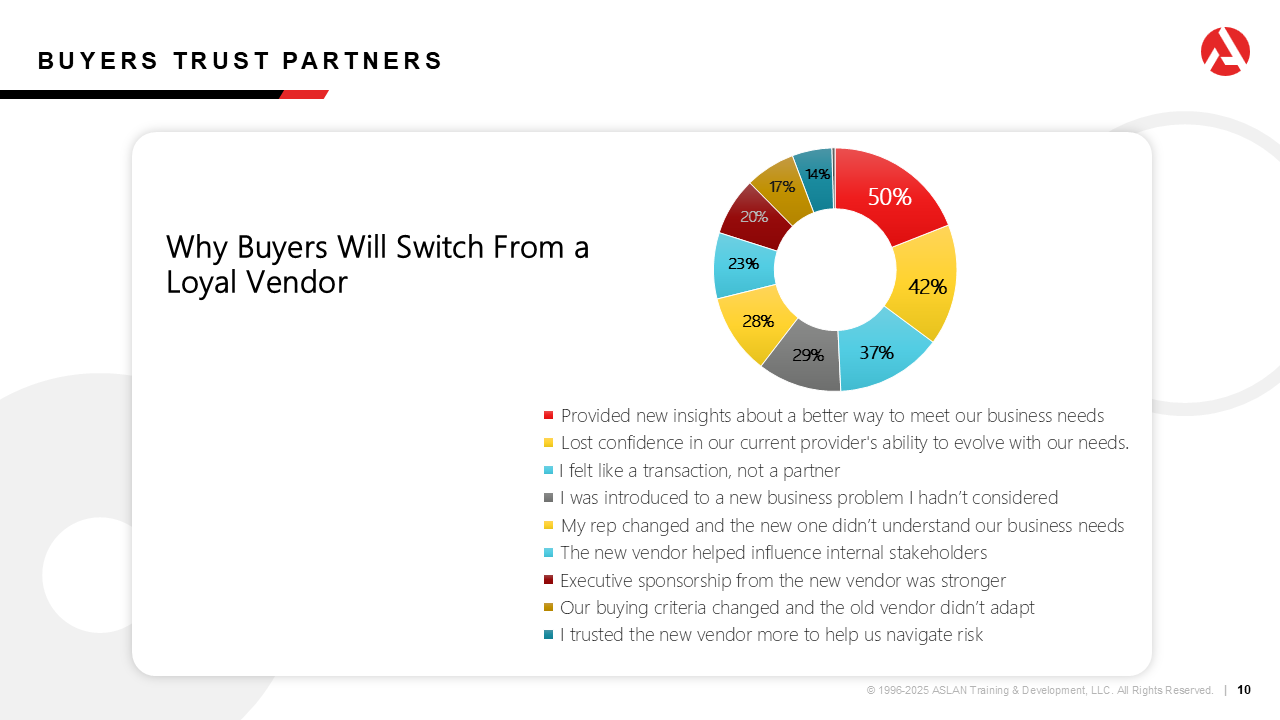
- 50% would switch for new insights into a better way to meet their business needs
- 37% would switch because they felt like a transaction, not a partner
- 29% would switch if a seller introduced a problem they hadn't considered
- 28% would switch because their rep changed and the new one didn't understand their business
Half of buyers would walk away from a satisfied vendor relationship if a new seller showed them something they didn't already know. Satisfaction alone doesn't create loyalty. The sellers who keep accounts keep bringing something worth staying for.
Three things follow from this:
- Equip sellers to represent all options: not as a debate exercise but as a genuine service to buyers navigating a complex decision
- Make customization standard, not exceptional
- Give sellers strategies for engaging executives, because that's where the partner relationship is won or lost
Finding #3: Seller Confidence Is High; Execution Is Under Pressure
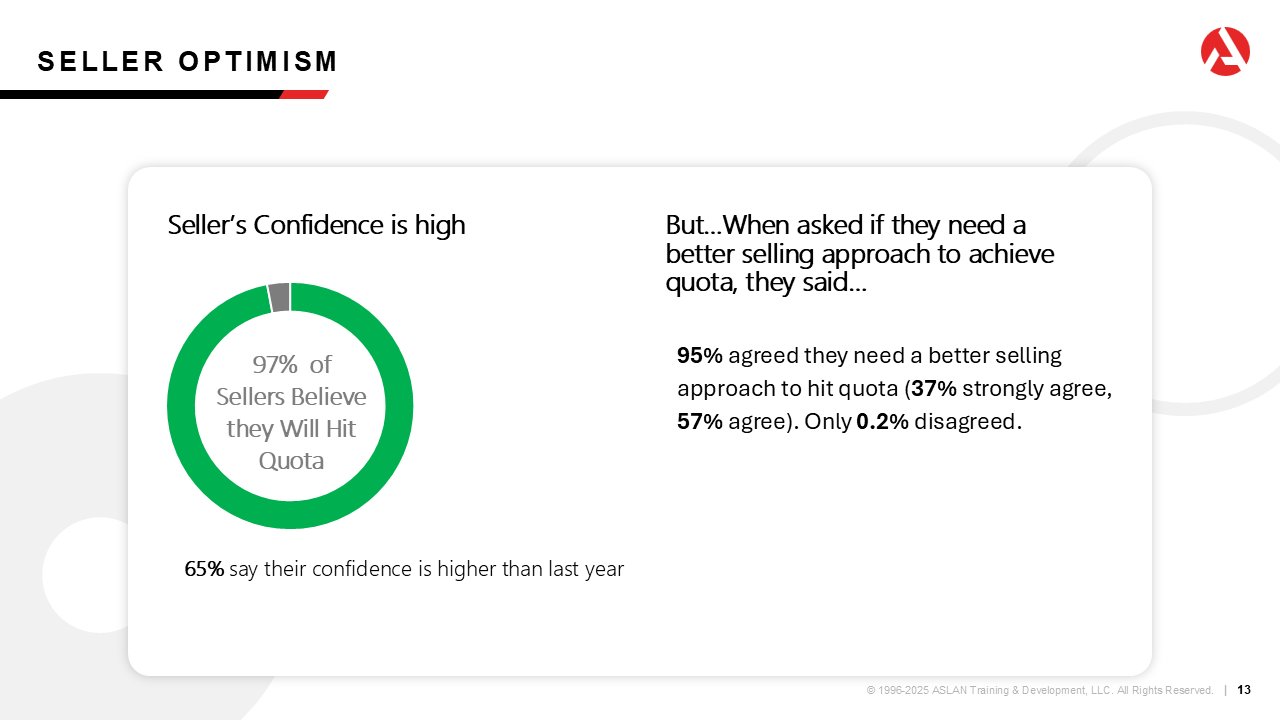
97% of sellers expect to hit quota this year. 65% say their confidence is higher than last year. And 95% say they need a better selling approach to do it.
Sellers see the gap between what they're doing and what buyers are asking for. The challenge is that high confidence tends to dampen urgency. A seller who's certain they'll figure it out won't lean into new capabilities until the evidence is impossible to ignore.
#1: What Sellers Say They Need in Training and Coaching
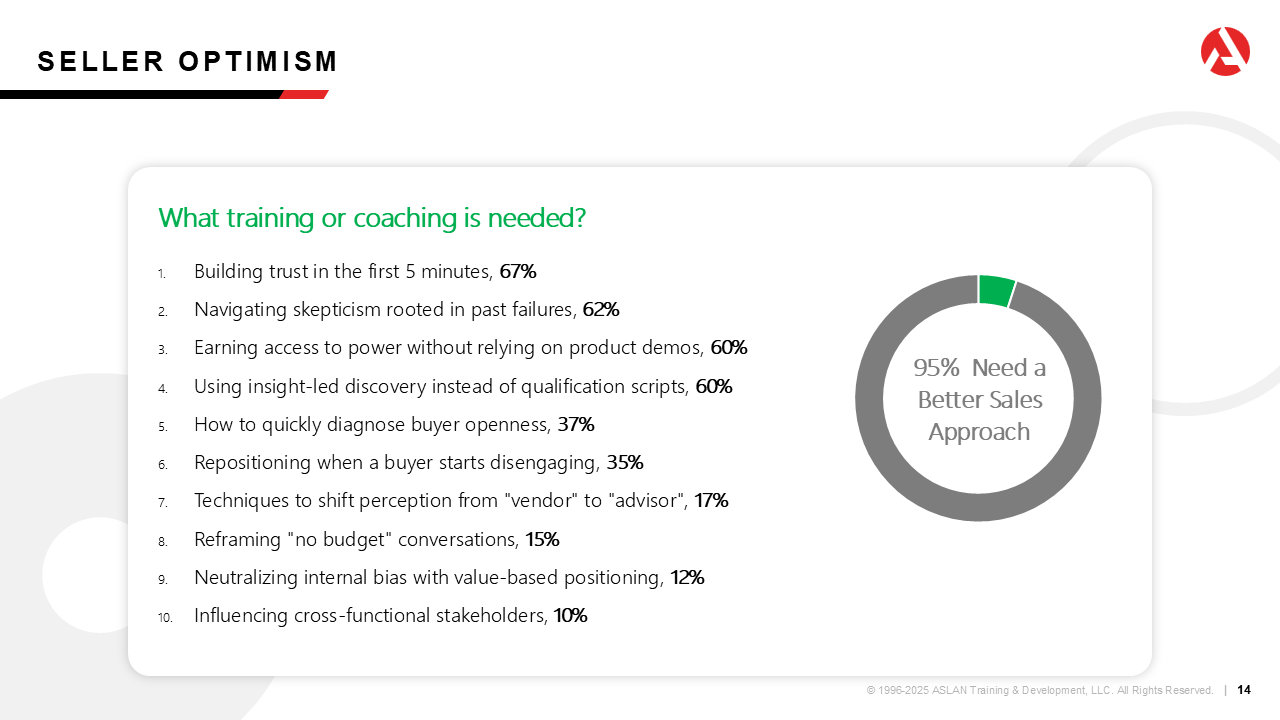
When asked what training and coaching would most help them overcome buyer resistance, sellers pointed directly at early-conversation capabilities:
- Building trust in the first 5 minutes: 67%
- Navigating skepticism rooted in past failures: 62%
- Earning access to power without relying on product demos: 60%
- Using insight-led discovery instead of qualification scripts: 60%
- Diagnosing buyer openness: 37%
Every one of those is a before-the-pitch problem. Sellers are asking for help earning the right to have a real conversation before the buyer has already decided whether they're worth engaging. They can see what they're missing. Most can't build those capabilities on their own.
#2: What Skills Sellers Say Are Missing
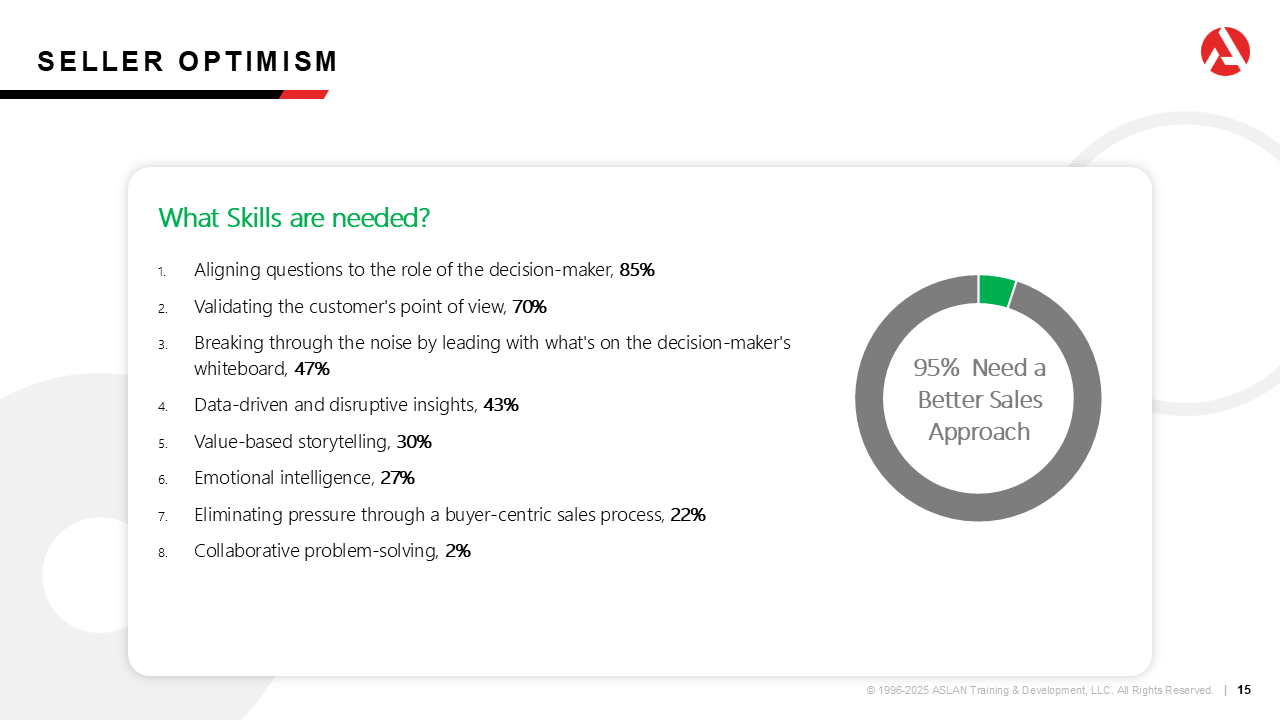
On the skills side, the same theme holds:
- Aligning questions to the role of the decision-maker: 85%
- Validating the customer's point of view: 70%
- Breaking through the noise by leading with what's on the decision-maker's whiteboard: 47%
Compare that to what most training budgets default to: product knowledge and pipeline management. Neither shows up in what sellers say they actually need. If there's a gap between your development priorities and this list, that gap is costing pipeline.
Three places to start:
- Address the barriers to change first. A seller who doesn't see the need to change won't absorb a new approach.
- Make the customer the central character of every process, every piece of collateral, every coaching conversation.
- Audit your development priorities against what sellers and buyers are both telling you they need.
The first coaching conversation has to help sellers see why what worked before is working less now.
Make the storm visible before you hand out the rain gear.
Close the Gap Between Your Sellers and Your Buyers
The gap between what buyers want and what sellers are delivering has been visible for years. This research quantifies it.
Buyers are arriving more informed, more opinionated, and less patient with sellers who show up to inform them rather than understand them. The sellers who earn their business demonstrate, quickly and credibly, that they understand the buyer's world well enough to add something to it.
That's a different kind of seller. Developing one is the work in front of you.
The full 2026 Buyer & Seller Insight Report goes deeper on every finding, including complete data breakdowns and a development roadmap for sales and enablement leaders. Download the report today, and put the latest insights into action.


Unlock Your Team's Full Sales Potential
Questions? Watch our CEO, Tom Stanfill, address our frequently asked questions below.