3 Ways to Motivate a Sales Team as Buyers Get Harder to Reach
By ASLAN Training
July 30, 2026
9 min read
Buyers are getting harder to reach, and it has nothing to do with how hard your team is working. Left unexplained, though, a team won't read it that way. Unexplained failure gets read as personal, with reps defaulting to "I'm bad at this" or "our approach doesn't work."
Sometimes that's true. Often, something else is actually driving it.
That's the actual lever for motivation here. Not encouragement, and not more activity. A specific, controllable explanation for what changed, one that replaces self-blame with something the rep can actually act on.
Three shifts are behind this, and each one has a specific, controllable response.
Key Takeaways
- Buyer silence gets misread as personal failure: Reps default to blaming their own skill or effort, when the real causes are specific, identifiable shifts that have nothing to do with how hard the team is working.
- AI research has moved the buyer's need upstream: Forrester found 94% of B2B buyers now use AI during their purchase process, and 6sense found the buyer's pre-contact favorite wins the deal roughly 80% of the time, meaning many conversations are already over before a rep reaches out.
- The brain's own filtering system is working harder than ever: The reticular activating system screens out most messages by default, and rising outreach volume means even strong, well-written messages get filtered before they're consciously read.
- A lot of "buyer silence" is just silence from the wrong person: With the typical B2B purchase now involving 13 internal stakeholders, the contact who's gone quiet often isn't the one whose engagement actually decides the outcome.
- Motivating a team here means diagnosis, not encouragement: Naming the real cause and recalibrating what "on track" looks like keeps a team's confidence intact; pushing more activity at any of these three causes just repeats the same mistake.
Why Won’t Buyers Respond The Way They Used To?
You’re not imagining this shift in buyer responsiveness. Several separate mechanisms are driving the change, and it’s easy to conflate them all into one vague, helpless feeling when things get stuck.
But often, it comes down to one of these issues:
- A buyer's actual need has often already moved by the time a rep reaches out. The conversation a rep thinks they're opening has frequently already happened, without them, through the buyer's own research.
- The messages that do land are getting filtered out faster than ever before. This isn't a new problem, it's an old one intensifying, and even strong outreach gets caught in the same net as weak outreach.
- A lot of "buyer silence" is really silence from the wrong person in the deal. The contact who's gone quiet may not be the one whose engagement actually determines the outcome.
None of these three is really about buyers becoming harder people to sell to. Each one is a specific, identifiable shift. That's exactly why "try harder" doesn't answer any of them, and why a team can start to feel like it's failing at something that was never about effort in the first place.
The fix isn't one tactic. It's diagnosing what, specifically, is holding your team back, and offering support tailored to the reality your sales team is living in.
Cause 1: The Buyer's Need Has Already Moved
These days, by the time a rep reaches out, the buyer has already used AI to research the category, compare vendors, and form a point of view. A message built around "let us help you understand this" lands on a need that no longer exists.
Recent research shows how far this shift has gone:
- Forrester found that 94% of B2B buyers used AI during their most recent purchase process, with more comparing vendors and researching products before contacting anyone than ever before.
- 6sense's Buyer Experience Report found that the vendor a buyer privately favors before ever contacting sales wins the deal roughly 80% of the time.
The conversation a rep thinks they're starting has often already happened, without them, weeks earlier.
In practice, this shows up in a few consistent ways:
- A rep leads with an explainer the buyer already resolved on their own.
- Outreach reads as behind the conversation instead of part of it.
- The message gets ignored, not because it's poorly written, but because it answers a question that's already closed.
The rep did real work and got silence. The real issue is timing relative to the buyer's own process, not skill.
How to Motivate Reps When the Buyer's Need Isn’t What It Used To Be
Motivating a team in this scenario starts with giving them a different job: instead of aiming to inform buyers, bring clarity by meet the buyer where their research has left off.
Before a rep reaches out to a new contact, have them check three things:
- What's already public: Recent category content, comparison articles, and review sites the buyer has likely already seen.
- What competitors are saying: If a buyer has compared vendors, they've already absorbed someone else's pitch. Referencing that landscape signals the rep understands where the buyer actually is.
- What's still unresolved: AI-assisted research is broad but often shallow on nuance and tradeoffs specific to the buyer's situation. That gap is where a message can add something genuinely new.
That last point is the real lever. A message that assumes the buyer already did their homework, and offers something their homework didn't cover, reads as a peer contribution instead of a sales pitch.
The difference shows up fast in two versions of the same message:
"Wanted to share how [Category] can help your team improve efficiency."
Versus
"Most teams comparing [Category] tools get stuck on the same tradeoff once they're a few weeks into an implementation. Here's what that actually costs six months in, and it's rarely the thing vendors get compared on upfront."
The first assumes the buyer needs an introduction. The second assumes, correctly, that they're already past that.
Reps coached on the second version start seeing actual signals back: a reply, a forward, a question. That feedback rebuilds confidence faster than any encouragement could.
Cause 2: The Signal Is Getting Lost in the Noise
Buyers are filtering harder than ever, and strong outreach is getting caught in the same net as weak outreach. This is an old problem intensifying, not a new one.
The reticular activating system, or RAS, is the part of the brain that filters incoming information for relevance. The RAS always screened out the vast majority of messages a person receives. Average response rates on cold introductory sales emails have long sat below 3%, and cold-calling appointment rates below half a percent.
Now, with AI-enabled research and outreach inundating buyers, the RAS is working even harder than it used to. That means more of what reps send gets filtered before it's consciously read, even if it’s genuinely valuable.
How to Keep a Team Motivated When Good Outreach Gets Filtered
The fix here isn't encouragement, it's changing what the team is optimizing for. "Well-written outreach" doesn't get past the RAS. "Specific enough to register" does.
The RAS reliably lets through two kinds of messages:
- Something already on the buyer's radar as a known priority or active concern.
- Something the buyer doesn't already understand, a genuine pattern interrupt.
Coach reps to build every message around one of these two triggers, not both diluted together. A message trying to cover value broadly ends up triggering neither.
A useful team exercise: have reps take their last five outbound messages and check whether each one states a category-level benefit or a specific, concrete claim the buyer probably hasn't already heard. A benefit any competitor could claim isn't specific enough to register. A claim built on a real insight, even a small one, is.
Compare:
"Our platform helps teams close more deals, faster, with better visibility."
Versus:
"Most teams we work with are surprised to learn their biggest deal-stage loss happens two steps earlier than they think it does."
The first is comprehensive and forgettable, and could describe almost any tool in the category. The second is narrow, oddly specific, and hard to skip past.
When reps see their own reply rates shift after this change, they get something more durable than motivation: proof their effort is actually connected to the outcome. That's what effort needs to feel worthwhile in the first place.
Cause 3: You're Reading Silence From the Wrong Person
According to Forrester research, the typical B2B purchase now involves a staggering 13 internal stakeholders. For a sales team, that means the contact who's gone quiet may not be the person whose engagement actually determines the outcome.
ASLAN's approach maps out how decisions actually get made inside large, complex organizations, where the outcome rarely rests with one person and rarely follows the org chart. Decision makers, influencers, evaluators, and coaches each play a different role in that network, and rank often has little to do with who actually drives the outcome.
Here's how that plays out in practice:
A rep has a strong relationship with an evaluator: the person who asks the questions, coordinates meetings, and seems genuinely engaged throughout. The evaluator goes quiet, and the deal appears to stall.
What they didn’t know was that the decision actually belonged to an influencer several steps removed from the visible conversation, who the rep never identified or engaged. The relationship the rep built was real. It just wasn't the one that drove the buying decision.
How to Keep a Team Motivated When Influence Is Hard to Track
Motivating a team when the internal politics of decision-making gets murky means giving them a diagnostic habit, not a pep talk about resilience.
Before a deal gets written off, or a rep's performance on it gets questioned, walk through three questions as a team:
- Who actually determines the outcome? Not who replies fastest or talks the most, but who has to sign off, and who that person listens to.
- Who have we actually been talking to? Map every contact against decision maker, influencer, evaluator, or coach. Most reps can do this in five minutes once asked directly.
- Where's the gap between those two lists? If the deal's real decision driver isn't on the contact list at all, that's the actual problem, not the rep's skill or effort.
This reframes a stalled deal from "we lost" to "we were talking to the wrong person," a far less demoralizing conclusion, and a far more actionable one. The next step is identifying and engaging the right stakeholder, not writing a better follow-up email to someone who was never going to move the deal forward.
A rep coached to ask "who else needs to be in this conversation" before writing a deal off is working a fundamentally different problem than a rep told to follow up more. One is diagnostic. The other repeats the same signal to the same, wrong, person.
Pulling it All Together: Recalibrate What Winning Looks Like Right Now
None of these three causes gets fixed by more activity. Pushing harder on outreach volume, follow-up cadence, or call counts doesn't address a shifted buyer need, a filtering problem, or a stakeholder mapping gap. It just repeats the same mistake more often.
The actual job here has two parts:
- Name the real cause with the team, so silence becomes a solvable diagnostic question instead of a referendum on the rep.
- Adjust what "on track" looks like. If reply rates and meeting-set rates are structurally lower everywhere right now, holding a team to last year's benchmarks manufactures a morale problem that was never really there.
This is a different job than diagnosing where a deal dies once it's already in motion. Both matter. This one is about keeping a team's confidence intact while the environment itself has shifted, not about fixing a single broken conversation.
Give Your Team the Explanation, Not Just the Encouragement
A team that doesn't know why buyers have gotten harder to reach will keep filling in that blank with the worst available explanation: their own skill, their own effort, their own approach. That's the actual cost of leaving this undiagnosed, not the missed pipeline, the slow erosion of a team's confidence in itself.
Other-Centered® Selling starts from a different premise entirely: the buyer's needs come first, before the pitch, before the process, before the sale. That shift changes everything.
Schedule a complimentary consultation today to learn how being Other-Centered® can transform your sales team.


Unlock Your Team's Full Sales Potential
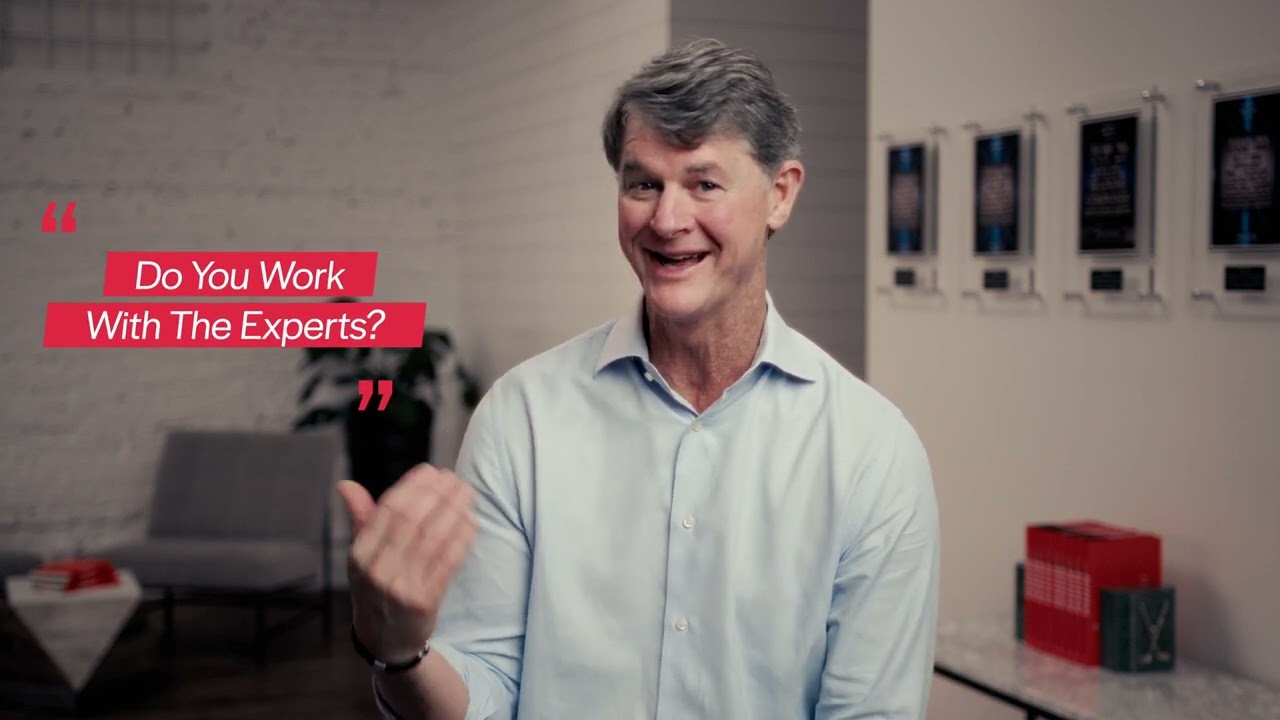
Questions? Watch our CEO, Tom Stanfill, address our frequently asked questions below.