How to Support Sales Managers with a Coaching Cadence That Delivers
Most sales orgs equip their reps with training, playbooks, and tools. But managers are often left without a clear path to coach.
That gap doesn’t just create confusion. It also slows down rep development, weakens pipeline quality, and kills momentum coming out of the SKO. Without structure, even strong managers default to firefighting. Coaching becomes inconsistent or reactive, if it happens at all.
The fix isn’t pressure. It’s a system. To drive Q1 results, managers need more than encouragement. They need clarity on what coaching should look like, and a rhythm to sustain it.
Why Don’t Sales Managers Coach Consistently?
Most managers want to coach, but according to Gartner, 75% report they’re overwhelmed by their responsibilities, and nearly as many say they aren’t equipped to lead change.
It’s no surprise. When coaching expectations are unclear and there’s no framework to follow, even experienced managers default to the urgent over the important. Coaching drops to the bottom of the list, not because it doesn’t matter, but because there’s no simple system to keep it alive.
And when coaching does happen, it often looks like:
- Quick pipeline check-ins with no skill feedback
- One-off pep talks instead of planned development
- Inconsistent touchpoints that fade after the quarter starts
When coaching is improvised, it tends to reinforce the status quo. Managers focus on whatever’s loudest or latest, not what’s essential. There’s no consistent way to measure progress, tailor support to rep needs, or prioritize the people who would benefit most.
The problem isn’t time; it’s targeting. Managers don’t need to coach more. They need to coach better. But without clarity on who to coach and how, they’re left to improvise. And that’s where performance suffers.
What Do Sales Managers Need to Coach Effectively?
Effective sales coaching starts with two things: clarity and rhythm.
Clarity means knowing who to coach, what to focus on, and how to measure progress. Without it, managers default to instinct, coaching whoever’s loudest, newest, or easiest to reach. A clear framework changes that.
It helps managers:
- Prioritize reps based on performance and potential
- Tailor conversations to actual skill gaps
- Track development over time, not just deal progress
Rhythm is what makes clarity sustainable. It’s not just about frequency; it’s about structure.
Rhythm means assigning time, format, and purpose to each coaching touchpoint, so it happens by design, not chance. When rhythm is missing, even the most well-intentioned managers fall back into reactive mode. Coaching becomes inconsistent, optional, or skipped entirely.
That’s why both elements have to work together.
For example, without clarity, a manager might spend time coaching a top rep who isn’t receptive, while overlooking someone struggling with a specific skill who’s open and ready to improve. And without rhythm, even the best coaching moments stay isolated and fail to drive change.
When managers have both, coaching transforms from a sporadic activity into a predictable, performance-driving habit. But knowing what managers need isn’t enough. You have to equip them with a system that delivers it consistently.
How to Equip Sales Managers to Become Consistent Coaches
To equip managers to coach consistently, start by giving them a simple filter to decide who and how to coach. Build a weekly rhythm that protects time for development. Then back it with ongoing support: the kind that makes new habits stick.
That’s what turns a coaching mandate into a sustainable system. Here’s how each piece works.
1. Give Sales Managers a Filter to Decide Who Gets Coached (and How)
Managers don't need a complex coaching matrix. They need a fast, repeatable way to decide which reps to coach, and what kind of coaching will help.
A model like ASLAN’s QuadCoaching®, which maps performance against receptivity, gives managers that clarity at a glance.
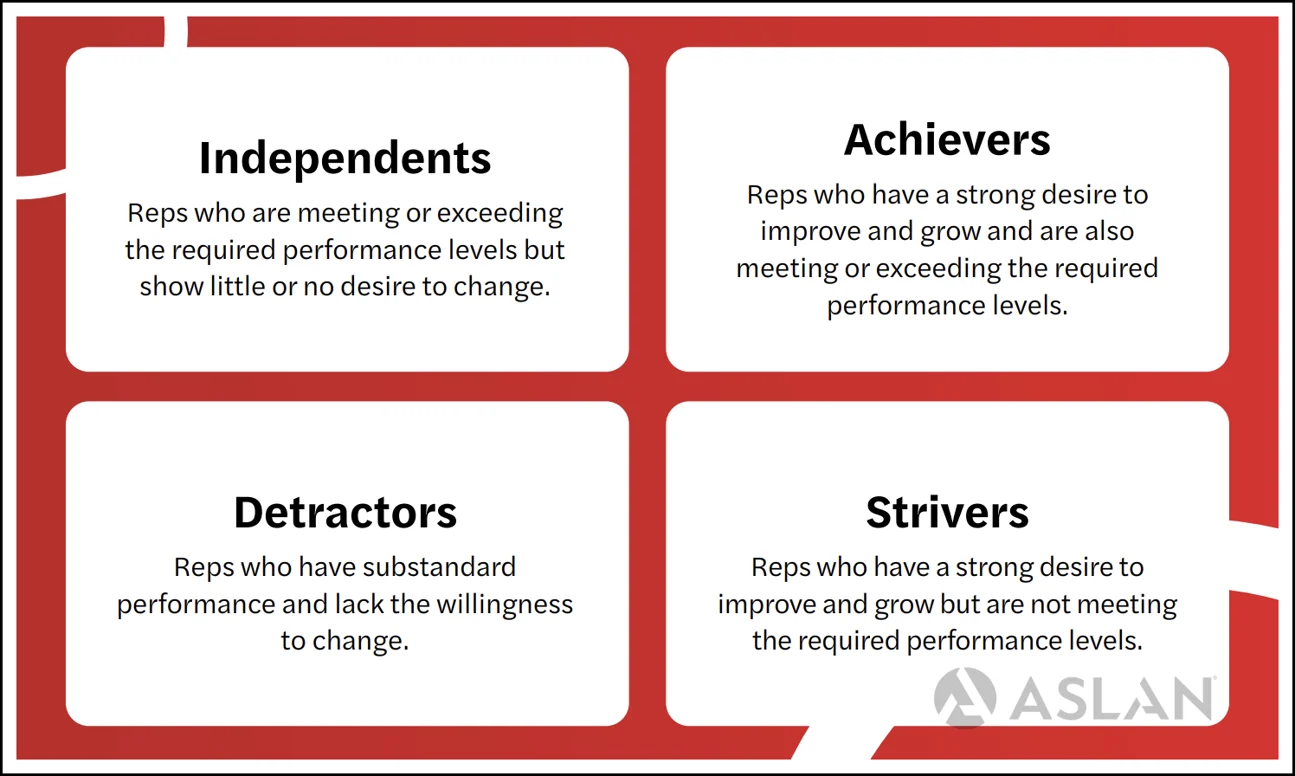
It helps them:
- Prioritize the reps who are open and need development
- Avoid wasting time trying to coach the unwilling or unready
- Adjust how they approach each rep based on readiness to change
For example, a low-performing but highly receptive rep might benefit from weekly coaching sessions focused on discovery or objection handling, because they’re engaged and ready to grow. A top performer who resists feedback may not need skill work at all; they might need time to build trust, or space to re-engage.
A system like this doesn’t just clarify who to coach. It also guides how to coach, and when to step back. That means managers stop defaulting to whoever’s behind quota or asking for help. Instead, they make smarter choices about where coaching will actually drive change.
Clarity begins with that decision. If they don’t know who or how to coach, nothing else sticks.
2. Give Coaching a Place on the Calendar
The most effective way to make coaching consistent is to protect time for it, every single week.
Why? Because coaching fades when there’s no time carved out for it. It gets edged out by pipeline reviews, urgent asks, and everything else that feels more immediate. Rhythm fixes that, not by adding more meetings, but by making coaching part of the manager’s standard operating system.
This is going to look different for every team, depending on the team’s size, responsibilities and coaching needs. But here’s a basic example of how a manager might structure their week:
- Early in the week: 10–15 minutes to choose a rep and define a skill to focus on
- Mid-week: one 20-minute coaching session focused on that skill, not pipeline
- End of week: 5 minutes to reflect, track progress, or prep for what’s next
This rhythm supports one intentional coaching interaction per week. It’s a pace that works well for frontline managers getting started or leading smaller rep pods within a larger sales organization. For broader coverage, managers might adjust by rotating reps week to week, coaching in pairs, or targeting shared gaps in group sessions.
Leaders don’t need to dictate a rigid rhythm, but they do need to support one. That might mean helping managers block time, removing competing priorities, or simply reinforcing coaching as a shared, visible expectation.
3. Anchor Coaching into a Clear Plan for Growth
To make coaching stick, managers need more than a consistent rhythm. They need a plan that connects every touchpoint to long-term growth.
This doesn’t mean creating something formal or complex. A simple coaching plan like a shared document, scorecard, or tracker can tie it all together, as long as it includes:
- One priority skill the rep is actively working on
- Clear behaviors that indicate progress
- A record of coaching activity and observed change
The plan becomes a living thread across weeks. A manager might revisit it briefly before a session to track progress, then use the next touchpoint to adjust goals or reinforce the same focus. Every conversation builds on the last.
It also keeps reps engaged. When they can see where they’ve improved, and what’s next, they’re more likely to stay invested. The plan turns coaching from a disconnected series of conversations into a momentum-building arc with a shared goal.
This is how clarity and rhythm produce real change: not just by checking the box, but by coaching toward something specific, together.
Equip Sales Managers to Lead Growth with Catalyst
If you want managers to coach consistently and well, you have to support them. That means giving them clarity on what matters, a rhythm that keeps it moving, and a simple plan to track progress. Without those elements, even the best intentions fade.
Clarity turns coaching into strategy. Rhythm makes it sustainable. And together, they make coaching work.
ASLAN can help you build that foundation. Catalyst™ enables managers to coach with confidence and consistency, using a clear framework, repeatable rhythm, and practical tools that drive rep development. To find out how Catalyst can support your sales leadership team, schedule a consultation today.


Unlock Your Team's Full Sales Potential
Questions? Watch our CEO, Tom Stanfill, address our frequently asked questions below.